
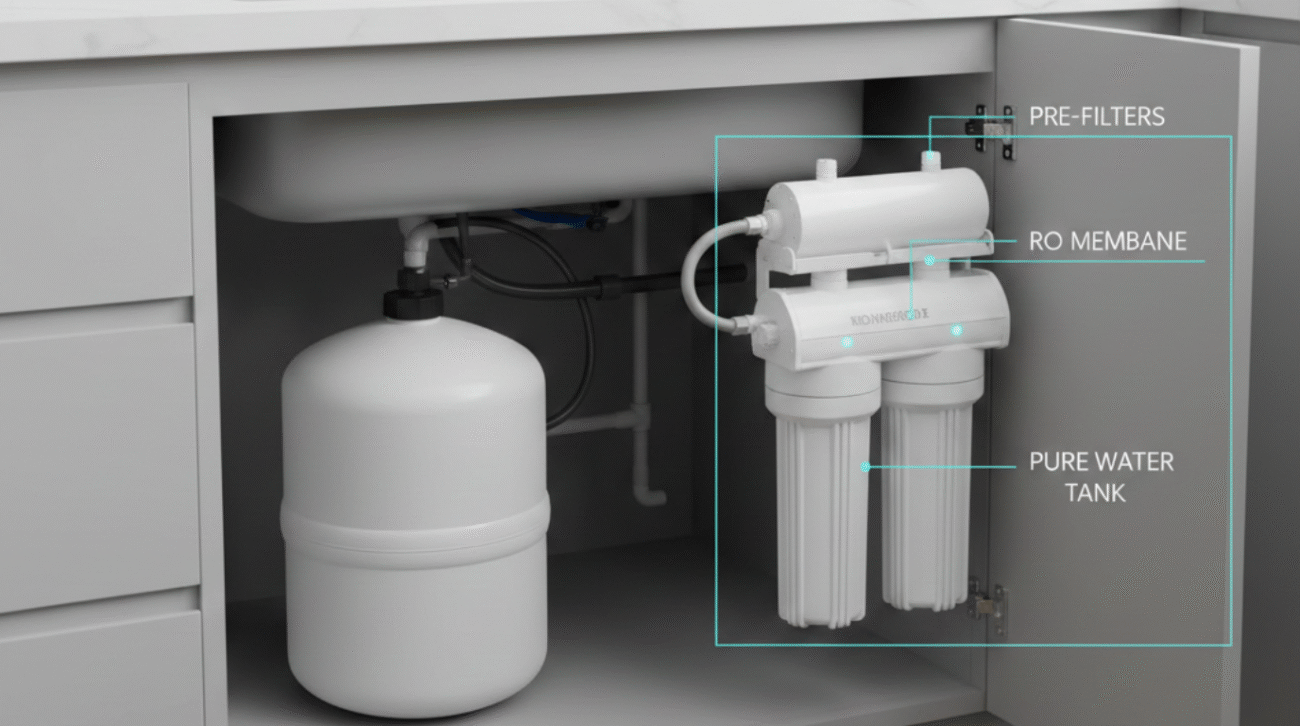

In today’s world, clean drinking water is more important than ever. Many people searching for Hom RO might think it’s a specific brand, but in reality, it refers to Home Reverse Osmosis (RO) water purifiers. These systems help households access safe, purified water without relying on bottled supplies. As water quality concerns rise, more families are turning to RO systems to improve health, taste, and convenience in daily life.
This guide explains the Hom ro meaning, how a home RO system works, its benefits, and tips for choosing the right one for your household.
What Is a Home RO Water Purifier?
A Home RO water purifier is a filtration system that removes impurities from water using reverse osmosis technology. The process pushes water through a semi-permeable membrane, allowing only clean water molecules to pass while blocking contaminants like dissolved salts, heavy metals, bacteria, and harmful chemicals.
Most RO systems for home use include multiple filtration stages, such as sediment and carbon filters, before water reaches the RO membrane. This ensures the water is not only safe but also clear, odor-free, and pleasant to drink.
Why RO Systems Are Popular for Household Drinking Water
RO systems are increasingly popular because tap, bore, or tanker water often contains unwanted minerals or microorganisms. Boiling water kills germs but cannot remove dissolved salts or heavy metals.
A home RO system provides a reliable, consistent solution. People search for hom ro because it offers long-term peace of mind and instant access to safe water without depending on bottled water.
Benefits of Using a Home RO System
A RO water purifier for home offers multiple advantages:
Health Protection: Removes contaminants that could cause stomach or kidney issues and supports overall family health.
Better Taste: Clean, filtered water is refreshing and encourages better hydration.
Convenience: Safe water is available instantly, no boiling or bottled water required.
Environmental Impact: Reduces plastic waste compared to bottled water.
Cost Savings: Over time, using a home RO system is more economical than purchasing bottled water regularly.
Key Features to Look for When Buying a Hom RO System
When selecting a home RO system, consider these features:
- Filtration Stages: Sediment, carbon, and RO membrane filters ensure comprehensive purification.
- Storage Capacity: Useful for households with high water usage or intermittent electricity.
- Mineral or UV Options: Optional features like mineral balancing or UV filtration can enhance water quality depending on local conditions.
- Build Quality & Maintenance: Ensure the system is durable, easy to install, and that replacement filters are accessible.
Maintenance, Filter Replacement, and Water Wastage
Regular maintenance is essential for RO systems. Filters usually need replacement every 6–12 months, depending on water quality and usage. Timely filter changes maintain water purity and system efficiency.
RO systems also produce some rejected water. Modern systems minimize waste, and many households reuse rejected water for cleaning or gardening.
Who Should Consider Installing a Home RO Purifier?
RO water purifiers are ideal for households relying on groundwater, bore wells, or tanker water, or where water has high TDS levels or an unpleasant taste. Families with children, elderly members, or health-sensitive individuals benefit most.
In areas with already treated, low-TDS water, an RO system may not always be necessary. Testing your water before installation is a wise step.
Cost Factors and Value for Money
The price of a Hom RO system depends on its features, capacity, and technology. While the upfront cost can seem significant, it is a long-term investment in health and convenience. Maintenance costs mainly involve filter replacements, which are manageable if planned in advance. Over time, a home RO system often proves more economical than buying bottled water while giving better control over water quality.
Tips for Choosing the Right Hom RO System
Before purchasing, check your local water quality and daily water needs. Look for systems with available replacement filters and reliable after-sales support. Focus on performance and functionality, not just brand names. Reading user reviews and understanding warranty terms also helps in making a confident choice.
Conclusion
The term Hom RO refers broadly to home reverse osmosis water purifiers, not a single brand. These systems provide clean, safe, and reliable drinking water, improving taste, health, and convenience for households.
By understanding how RO technology works, its benefits, maintenance requirements, and costs, you can make an informed decision for your family. Start with a system suited to your water quality and household needs, and enjoy the peace of mind that comes from knowing every glass of water is pure and safe.
A well-chosen home RO system isn’t just a purchase—it’s a practical, long-term solution for healthier living.





Leave a Comment