
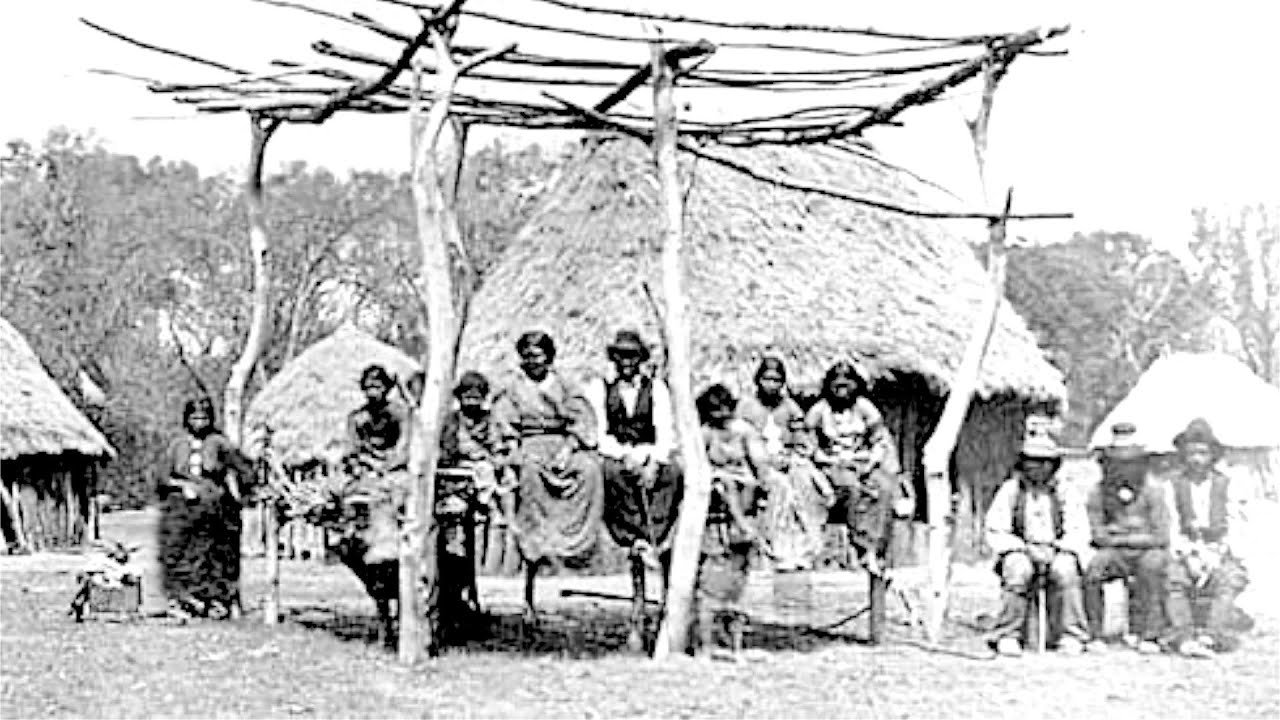

By inquiring what sort of homes the Atakapa people dwelled in we are actually questioning how a community had fashioned its shelters out of the environment and the materials and climate that surrounded them, how family life and everyday work had been contained in those spaces, and how place and culture intertwined. The Atakapa had occupied the coast of the Gulf of Mexico in modern southern Louisiana and southeastern Texas. Their marshes, riverbanks and coastal plains have become their villages and seasonal camps and their houses are a product of that land and the useful requirements of hunting, fishing and small-scale agriculture.
Atakapa lived in simple framed huts and thatched houses which were the most common forms of shelter. The houses were commonly made of the locally sourced materials like wooden poles, reeds, grasses and palm thatch. These frames were created by pushing poles into the ground then bending or leaning the poles to create a dome or a low peaked roof. The constructors had stitched mats or thatch over that frame to keep out the wind and rain and to create shade in hot months. These methods of construction resemble what scholars refer to wigwams or wickiups elsewhere in North America and constitute weather adapted construction of a coastal area.
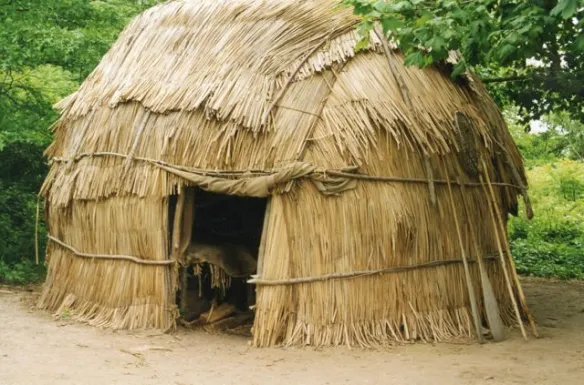
Seasonality contributed to the construction of homes by the Atakapa as well as their location. During certain seasons families occupied more substantial permanent or semi permanent buildings in the areas around their gardens and with their village centers. During the rest of the seasons when fishing or hunting involved people having to move around, a temporary shelter made out of lighter materials could be removed and set up again. Movement or the speed at which shelters could be reconstructed was essential in a region characterized by receding waterways, storms and the fluctuating efficiency of marsh and coastal fisheries. The usual similarity is that indigenous coastal lifeways are flexible.
The Atakapa interior kind of dwelling was made up of sleeping on small hearth mats and tool and food storage facilities. Extended family groups were able to meet and do craft work in larger village houses. Bedding and insulation materials were made out of grass fur and woven beds and utensils were typically ceramic pots and local potters. Space was well planned and shared and mirrored social patterns on which family work and child rearing occurred beside each other. Archaeological documentation and historical accounts relate that the Atakapa settlements were social and economic centers constructed around the facts of the environment.
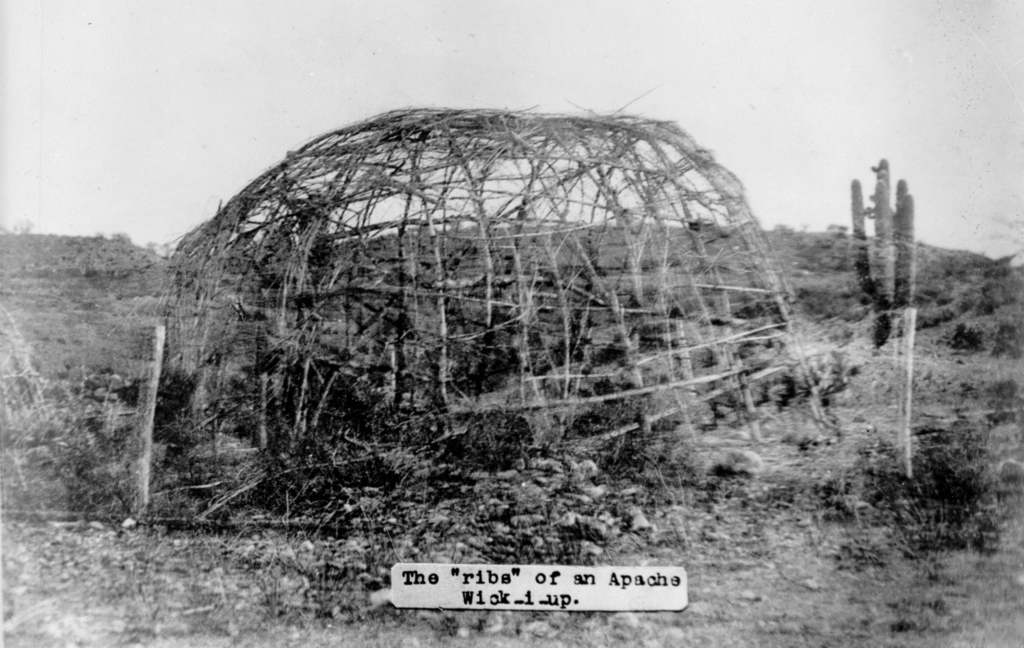
The details of design in different places were different due to the fact that the materials varied in different areas of coastal marsh islands, riverine areas, and prairies on the inland areas. Where palms and rushes were abundant palmetto fronds and reed mats served well. Timber poles provided stronger frames in cases where the trees were close. On barrier islands where people could reach only the driftwood and lighter brush, the dwellings were adjusted in this manner. This sensitivity to local materials illustrates the Atakapa ability to create comfortable spaces of living out of what the land gave them. General descriptions of the construction methods of wigwams and wickiups provide a wider background to the indigenous shelters based on pole structures and thatch applications.
Home design was also affected by the communal character of the life of Atakapa village. Houses did not exist in the form of islands but as components within a village pattern that comprised cooking pits, shell middens, storage places and way to waterways. The site of the residential places was more oriented to the access to food and transport. Damp weather and the occasional storms were always a factor in mind and thus the raised floor or well closed thatch and smoke holes above fireplaces were invariably the answer. These simple decisions turned the settlements into habitable locations and served to support the existence of the community in an occasionally harsh coastal zone.
Atakapa settlements in several ways were influenced by colonial contact and subsequent changes in history. Places of disease displacement and shifting trade relations changed the village size and location as well as construction materials in some cases. Eighteenth and nineteenth-century missionary and colonial reports of Atakapa villages and houses are to be read in conjunction with archaeological indications in order to create a complete picture. As a researcher, one can find both primary sources and interpreted overviews in scholars and the museums where they prefer to dig deeper.
The knowledge of what kind of homes the Atakapa constructed provides us with more than the architectural facts. It demonstrates the way in which individuals have adjusted to arrange how the family life was structured and the integration of cultural knowledge into the most fundamental domestic activities. The design of shelters bore traditions relating to methods of construction concerning what species of plants to cut when and how to build a fire to warm oneself and how to build a fire to smoke out. So home building was a matter of identity not so much of survival.
To those who may wish to read more the following are high authority materials that touch directly on the subject. An in-depth coverage of the Atakapa way of life and history has been made by the Texas State Historical Association. The overall context in regards to indigenous housing designs can be discovered in the Encyclopedia Britannica that describes such types of housing as wigwams and the like. In most areas, the National Park Service provides the archaeological and cultural backdrop of the native American structures. Primary materials that are available at the Smithsonian and the Bureau of American Ethnology are used to clarify historical accounts and archaeological records. Below are links to your reference.
Frequently Asked Questions
What general type of house did the Atakapa live in
The Atakapa typically lived in framed huts and thatched dwellings built from local poles, reeds , grasses and palm thatch. Their homes ranged from temporary shelters to more permanent village houses depending on season and need.
Were Atakapa houses like wigwams
Yes, the Atakapa used structures that share many features with wigwams and wickiups such as pole frames and organic coverings. The specific shape and materials were adapted to the Gulf coast environment.
Did Atakapa homes protect against storms and flooding
Atakapa builders used design strategies suited to coastal life including sturdy frames thatched roofs and in some cases raised elements to reduce water intrusion. However major storms could still damage villages and seasonal mobility helped people respond to environmental risk.
How do we know about Atakapa houses today
Knowledge comes from a mix of archaeological findings, historical records and comparative study of indigenous building techniques in the region. Museums, universities and archives hold much of the primary material used by researchers.
Where can I read more about Atakapa architecture and culture
Authoritative starting points include the Texas State Historical Association entry on the Atakapa, the Smithsonian collections and broad overviews from the Encyclopedia Britannica and the National Park Service linked above. These sources provide both narrative context and references to deeper research.


Leave a Comment