

Introduction
Imagine a group of experienced hikers in the remote Ural Mountains of Soviet Russia in 1959, setting up camp on a snowy slope known as Kholat Syakhl, or “Dead Mountain.” In the middle of a freezing night, they slash their way out of their tent from the inside, fleeing barefoot into a blizzard without their gear. When rescuers arrive weeks later, they find the hikers’ bodies scattered, some with inexplicable injuries like crushed chests and missing eyes or tongues, yet no signs of external struggle. This is the Dyatlov Pass incident, a chilling enigma that has puzzled investigators for decades, with explanations ranging from avalanches to military tests or even UFOs. Such real-world mysteries force us to question evidence, challenge assumptions, and piece together clues in ways that mirror life’s uncertainties.
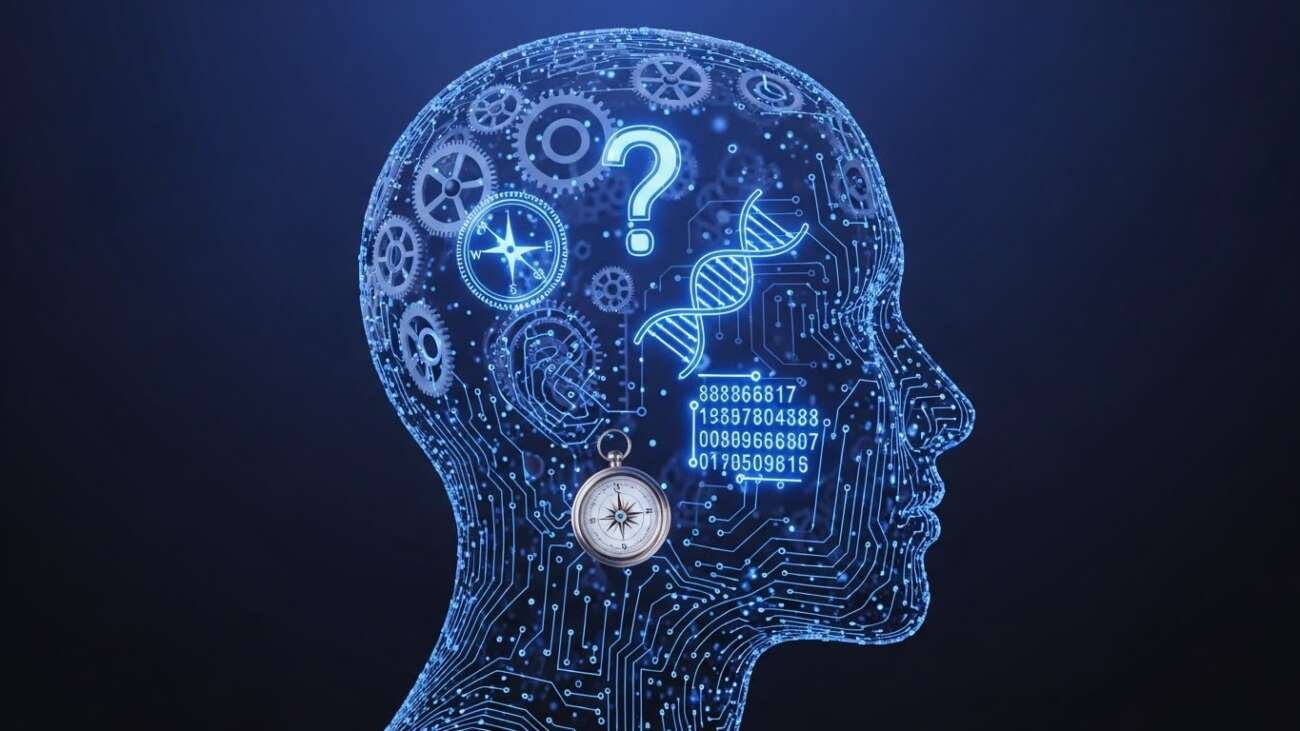
Critical thinking is the art of analyzing information objectively, evaluating evidence, identifying biases, and drawing reasoned conclusions. It involves skills like logical reasoning, pattern recognition, and hypothesis testing tools that help us navigate complex problems beyond just puzzles.
In this blog, we’ll explore how these unsolved or debated mysteries can serve as dynamic exercises to hone your critical thinking. By drawing from historical, scientific, and modern enigmas, you’ll practice dissecting facts from fiction, weighing theories, and reflecting on your own thought processes. We’ll cover seven exercises, each inspired by a real-world case, complete with activities and debriefs. Grab a notebook, and let’s dive in solo or with a group for added perspectives.
Section 1: Understanding the Basics of Critical Thinking Through Mysteries
Why Mysteries Make Great Critical Thinking Tools
Real-world mysteries are perfect for building critical thinking because they present incomplete data, conflicting accounts, and ambiguous clues much like everyday decisions in business, relationships, or current events. They require you to evaluate evidence without jumping to conclusions, recognize personal biases (like favoring sensational explanations), and test hypotheses logically. Benefits include sharper observation (spotting overlooked details), better deduction (connecting dots), and improved bias detection (questioning media hype or cultural assumptions). Plus, they’re engaging, turning skill-building into an adventure.
Exercise 1: The Voynich Manuscript Puzzle
The Voynich Manuscript is a 15th-century illustrated codex, carbon-dated to 1404–1438, likely created in Italy during the Renaissance. It features an unknown script (“Voynichese”) with about 240 vellum pages of bizarre illustrations: unidentified plants, astronomical diagrams, bathing women in pools, and cosmological maps. Owned by figures like Holy Roman Emperor Rudolf II and alchemist Georg Baresch, it passed to Yale University’s Beinecke Library in 1969. Despite statistical patterns resembling natural languages (e.g., Zipf’s law), it remains undeciphered, with theories including a herbal manual, cipher, constructed language, or hoax.
Activity: Access sample pages online (e.g., via Yale’s digital scans). Form theories on its origin could be a lost medical text, an alchemical code, or meaningless gibberish? Analyze patterns: Count character frequencies (e.g., common bigrams like ‘sh’) and compare to known languages. Hypothesize its purpose based on sections (herbal vs. astronomical).
Skills Targeted: Pattern recognition and inference drawing.
Debrief: Reflect: What assumptions did you make about the illustrations (real plants or inventions)? How did statistical patterns influence your theory? Consider recent developments, like 2024 multispectral scans revealing hidden details, and debate if it’s a hoax replicable by medieval methods.
Section 2: Historical Mysteries for Analytical Skills
Diving into the Past
Historical mysteries encourage empathy by placing you in the era’s context considering limited technology, cultural norms, and incomplete records. They build analytical skills through evidence evaluation and exploring multiple viewpoints, helping you understand how new discoveries can reshape narratives.
Exercise 2: The Lost Colony of Roanoke
In 1587, about 115 English settlers, led by John White, established a colony on Roanoke Island, North Carolina, the first in North America. White left for supplies but returned in 1590 to find the site abandoned, with no signs of violence. Key clues: “CROATOAN” carved on a post and “CRO” on a tree, signaling relocation to Croatoan Island (now Hatteras). Theories include assimilation with local tribes like the Croatan (supported by oral traditions of European-featured descendants), disaster from drought or disease, or massacre by Powhatan tribes.
Activity: Role-play as 1590 investigators. List evidence (carvings, absent boats, looted trunks) and weigh theories: Assimilation (e.g., European artifacts on Hatteras)? Disaster (severe 1587–1589 drought)? Build a timeline and debate probabilities using maps.
Skills Targeted: Evidence evaluation and considering alternative perspectives.
Debrief: Discuss real theories, like 2025 archaeological finds of hammerscale on Hatteras suggesting settler activity. How might new evidence, like DNA from descendants, change your view? Reflect on biases in historical accounts.
Exercise 3: The Identity of Jack the Ripper
In 1888 London, an unidentified killer murdered at least five women in Whitechapel, known as the “canonical five”: Mary Ann Nichols, Annie Chapman, Elizabeth Stride, Catherine Eddowes, and Mary Jane Kelly. Murders involved throat slashing and mutilations, with organs removed, suggesting anatomical knowledge. Over 100 suspects proposed, but police focused on three like Aaron Kosminski (linked via disputed DNA). Alibis cleared many, like butcher John Pizer. Theories: Single serial killer with a sexual motive, or multiple perpetrators.
Activity: Analyze suspect profiles (e.g., Kosminski’s mental health, Pizer’s alibis) and debate probabilities. Examine wound patterns and timelines to link crimes; role-play a debate avoiding biases like xenophobia in media reports.
Skills Targeted: Logical deduction and bias avoidance.
Debrief: How did you prioritize evidence (forensic reports vs. witness descriptions)? Consider how hoaxes, like the “Dear Boss” letter, influenced perceptions.
Section 3: Scientific and Natural Puzzles for Logical Reasoning
Science Meets Mystery
These puzzles apply the scientific method: observe, hypothesize, test, and revise. They promote skepticism toward myths and logical analysis of data, relevant for debunking misinformation in science or news.
Exercise 4: The Bermuda Triangle Enigma
The Bermuda Triangle spans the North Atlantic between Florida, Bermuda, and Puerto Rico, infamous for alleged disappearances like Flight 19 (1945 Navy bombers lost to navigation errors) and USS Cyclops (1918, structural failure). Facts show no higher incident rate than other busy seas; explanations: hurricanes, Gulf Stream currents, human error. Myths include Atlantis tech or UFOs, fueled by sensational books like Charles Berlitz’s 1974 work.
Activity: Map incidents and research explanations (e.g., weather data for storms). Debunk claims: Analyze debris patterns or accident stats to compare with global averages.
Skills Targeted: Data analysis and skepticism.
Debrief: Reflect on media sensationalism, how do exaggerated accounts (omitting storms) skew perceptions? Use tools like NOAA reports for fact-checking.
Exercise 5: The Wow! Signal from Space
Detected in 1977 by Ohio State’s Big Ear telescope, the Wow! Signal was a 72-second narrowband radio burst at 1420 MHz (hydrogen line frequency) from Sagittarius. Intensity peaked at 30 sigma above noise; no modulation. Hypotheses: Extraterrestrial (fits SETI criteria) or natural (e.g., 2024 study on stellar emissions energizing hydrogen clouds). No recurrence despite searches like 2022 Breakthrough Listen.
Activity: Interpret signal data (frequency, duration). Hypothesize origins: Alien beacon or terrestrial interference? Assess probabilities using follow-up null results.
Skills Targeted: Hypothesis formation and probability assessment.
Debrief: How does lack of repetition affect your theory? Debate implications for SETI.
Section 4: Modern Mysteries for Contemporary Application
Puzzles in the Digital Age
Today’s mysteries tie into tech, misinformation, and global events, sharpening skills for spotting fake news or evaluating online sources amid rapid information flow.
Exercise 6: Unsolved Cyber Mysteries (e.g., Cicada 3301)
Cicada 3301 launched cryptic online puzzles in 2012–2014 (and clues in 2016–2017) via 4chan and Twitter, involving cryptography, steganography, and anonymity. Puzzles recruited for ideals like privacy and anti-censorship, leading to a private forum project. Clues spanned images, music, and physical signs; some remain unsolved, like parts of Liber Primus.
Activity: Simulate a simplified puzzle, decode a steganographic image or basic cipher. Break down clues collaboratively; discuss recruitment ethics.
Skills Targeted: Cryptography basics and collaborative thinking.
Debrief: Ethical considerations: Was it a legit recruitment or potential illegal activity? Denials of hacks highlight source verification.
Exercise 7: The Disappearance of MH370
Malaysia Airlines Flight 370 vanished on March 8, 2014, en route from Kuala Lumpur to Beijing with 239 aboard. Last contact at 01:19 MYT; deviated west via radar, ended in the southern Indian Ocean per Inmarsat pings. Debris like a flaperon found in 2015; theories: Hypoxia, pilot suicide, or hijacking. Searches (2014–2017, 2018, resumed 2025–2026) covered vast areas but yielded no wreckage or cause.
Activity: Construct a timeline from takeoff to final ping. Evaluate theories (e.g., captain’s simulator data) and conspiracies; critique sources like official reports vs. media.
Skills Targeted: Critical evaluation of sources and scenario planning.
Debrief: How do delays in data sharing affect trust? Reflect on ongoing 2026 searches.
Section 5: Tips for Implementing and Adapting Exercises
Customize these for audiences: For kids, simplify with visuals and group discussions; for professionals, tie to workplace scenarios like risk assessment. Solo practice builds independence, while groups foster diverse viewpoints through debate. Use tools like apps (e.g., Puzzle Baron for logic games), books (The Demon-Haunted World by Carl Sagan for skepticism), or websites (TED Talks on critical thinking). Track progress by journaling: Note initial assumptions vs. final conclusions, and revisit with new info.
Conclusion
From the cryptic Voynich pages to MH370’s elusive fate, these seven exercises highlight how mysteries train us in evidence-based reasoning, bias busting, and creative problem-solving. You’ve practiced dissecting historical vanishings, debunking scientific myths, and navigating digital riddles skills that enhance daily decisions, like analyzing news or solving work challenges.
Apply them: Next time you encounter a headline, question sources and test hypotheses. Share your own mystery-inspired exercises in the comments what puzzle sharpened your mind? As Sherlock Holmes said, “When you have eliminated the impossible, whatever remains, however improbable, must be the truth.” Keep questioning, and watch your thinking evolve.






Leave a Comment